VGT Versus Fixed Turbochargers: Which Fits?

A turbocharger decision can affect far more than peak horsepower. It changes low-rpm pull, engine-braking performance, fuel economy, repair complexity, and how quickly a working truck gets back on the road. When comparing VGT versus fixed turbochargers, the best choice comes down to the engine platform, the truck’s job, and whether the supporting systems are in proper condition.
For a modern electronically controlled diesel, a VGT is often the correct replacement because the ECM, actuator, exhaust brake, and calibrations were designed around it. A fixed-geometry turbo remains a proven, durable option on many older engines and purpose-built applications. Neither design wins every situation.
VGT versus fixed turbochargers: the core difference
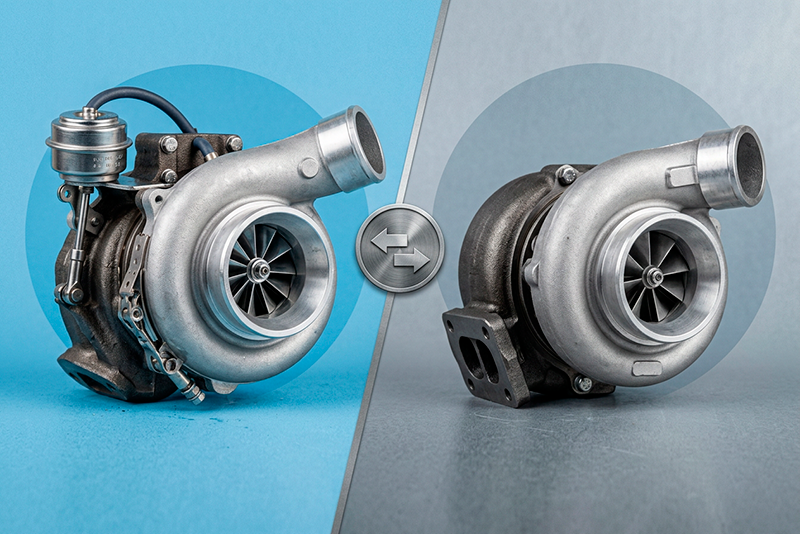
A fixed-geometry turbocharger uses a stationary turbine housing with a set exhaust-side area. Exhaust gas passes through the housing and spins the turbine wheel. The housing’s size is a compromise: a tighter housing improves low-speed response, while a larger housing supports higher exhaust flow and power at elevated rpm.
A variable geometry turbocharger, commonly called a VGT, changes the effective turbine housing area while the engine is running. Adjustable vanes around the turbine direct exhaust gas at the turbine wheel. At lower engine speed, the vanes can close to speed up exhaust flow and build boost sooner. Under higher load and rpm, they open to handle more exhaust volume without creating unnecessary drive pressure.
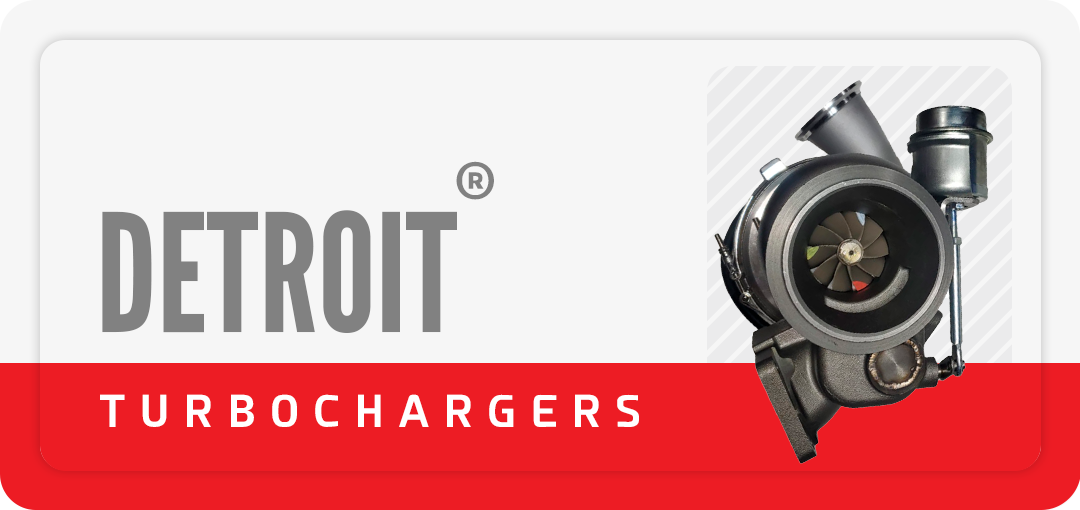
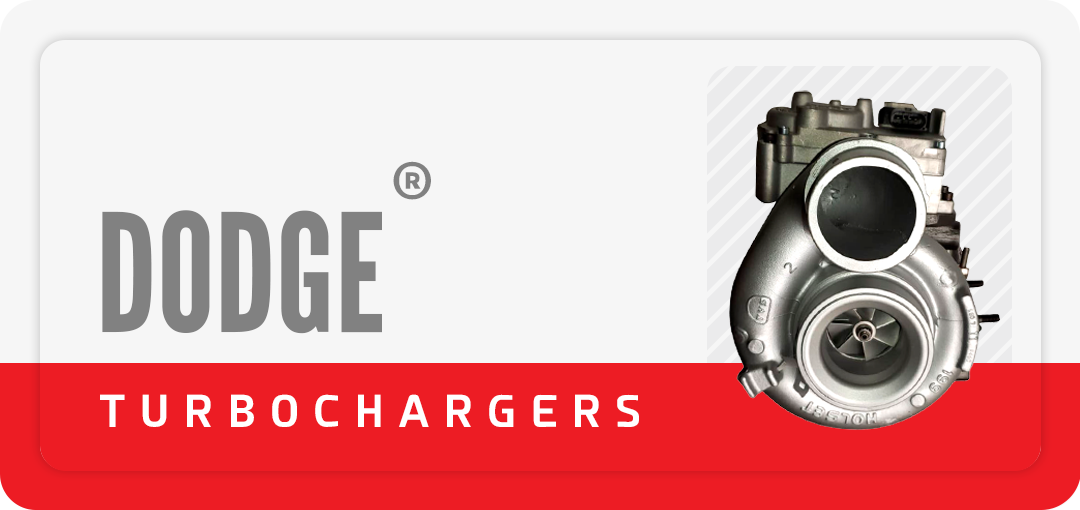
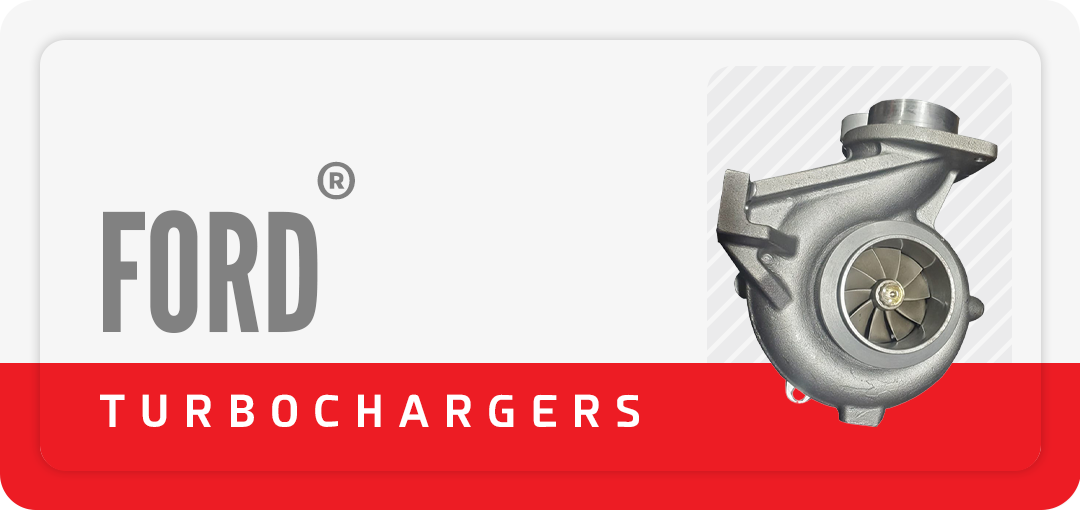
That adjustability is why VGT systems are common on late-model Ford Power Stroke, Dodge Ram Cummins, Duramax, International, Detroit, Mercedes-Benz, and Volvo and other electronically managed diesel platforms. The turbo is not operating alone. It works with engine sensors, ECM commands, emissions equipment, and often the exhaust brake.
Low-end response and towing performance
For trucks that pull loaded trailers, run stop-and-go delivery routes, or operate in hilly terrain, low-rpm response matters. A VGT generally builds boost earlier than a comparably sized fixed turbo. That improves launch feel, reduces lag, and gives the engine more usable torque in the lower rpm range.
The benefit is especially noticeable when a truck is loaded and the transmission drops a gear. Instead of waiting for engine speed to rise before the turbo comes alive, the VGT can tighten vane position and use available exhaust energy more efficiently. On an OEM-calibrated application, this helps the engine meet the response and drivability targets set by the manufacturer.
A fixed turbo can still perform very well, particularly when its housing and wheel combination match the engine’s intended operating range. In a steady high-load application, such as equipment that runs at a consistent rpm, the simplicity of a fixed housing can be an advantage. But on a street-driven work truck that repeatedly moves between idle, part throttle, and full load, fixed geometry usually involves more compromise.
Exhaust braking and engine control
One of the strongest reasons manufacturers use VGT technology is exhaust braking. By closing the vanes, the turbo can create backpressure in the exhaust system. That resistance helps slow the engine and truck on a grade, reducing service-brake heat and wear.
On many late-model diesels, the VGT is an integrated part of the exhaust brake system. Replacing it with a different style of turbo without correct supporting hardware and tuning can cause weak braking, fault codes, poor boost control, or drivability complaints. A turbo upgrade is not a standalone decision when the engine depends on electronic vane control.
VGT operation also lets the ECM manage boost more precisely across changing conditions. The engine computer can react to throttle position, manifold pressure, exhaust temperature, engine speed, load, and other inputs. This gives the factory system a wider usable range than a fixed housing can provide.
Durability: simple hardware versus more moving parts
A fixed turbocharger has fewer moving components on the turbine side. There are no adjustable vanes, unison ring, or electronic actuator to command vane position. Fewer parts can mean fewer failure points, which is valuable for certain older mechanical engines and severe-duty uses where simplicity is the priority.
That does not mean fixed turbochargers are maintenance-free. Bearing damage, wheel contact, oil contamination, restricted oil feed lines, charge-air leaks, and foreign-object damage can destroy any turbocharger. The difference is that a VGT adds a control system and moving vane assembly that must stay clean and functional.
VGT vanes can stick when soot, corrosion, or heat damage builds in the turbine housing. The actuator can fail electrically or mechanically. On some applications, a replacement actuator must be programmed or calibrated correctly before installation. If the underlying issue is ignored, a new turbo can develop the same complaint quickly.
The practical rule is straightforward: a VGT is highly durable when the engine’s air, oil, fuel, exhaust, and control systems are healthy. It is less forgiving when maintenance has been deferred or when the truck has ongoing emissions, sensor, wiring, or lubrication problems.
How to choose the right turbo for the job
Start with the truck’s original design. If the engine came equipped with a VGT, the correct direct-fit VGT replacement is normally the best solution for restoring stock towing, braking, emissions-related control, and drivability. A quality remanufactured or new replacement unit should match the application, turbo part number, actuator requirements, and calibration needs.
A fixed turbo makes sense when the engine was designed for one, or when a properly engineered aftermarket setup is being built for a specific performance goal. High-horsepower applications may use fixed geometry because a larger turbine housing can support significant exhaust flow at higher rpm. That trade-off often means slower spool-up and reduced response at lower engine speed.
Before choosing, consider four operational questions:
- Does the truck need factory-level exhaust braking for towing or mountain operation?
- Is the engine electronically controlled around an actuator-driven VGT system?
- Does the truck spend more time at low rpm and changing loads, or at stable high-load engine speed?
- Is the goal dependable stock replacement, or is the engine being modified with matching fuel, air, tuning, and transmission upgrades?
For most commercial operators, the answer is not about chasing the largest compressor wheel. It is about restoring dependable boost, safe exhaust temperatures, correct engine braking, and uptime.
Diagnose the system before replacing the turbo
A loss-of-boost complaint does not automatically mean the turbocharger has failed. Replacing a turbo without testing the system can turn an avoidable repair into an expensive comeback. Inspect the charge-air cooler boots, clamps, piping, intake restrictions, exhaust leaks, crankcase ventilation condition, oil feed and drain lines, and intercooler for leaks or contamination.
On a VGT-equipped truck, scan for diagnostic trouble codes and compare commanded vane position with actual position where the scan tool allows it. Check actuator wiring, connectors, sensor readings, and battery voltage. Low voltage, damaged wiring, or a faulty pressure sensor can create turbo-related codes even when the rotating assembly is in good condition.
Also identify why the original turbo failed. Oil starvation can come from a restricted feed line, low oil pressure, incorrect oil, or sludge. Oil contamination can damage bearings and seals. A broken compressor or turbine wheel may point to foreign material entering through the intake or exhaust. Excessive soot can indicate an upstream combustion or emissions-system concern that must be corrected before installing another VGT.
When a replacement is required, do not reuse questionable oil lines, damaged air ducts, or contaminated intake components. Prime the turbo according to the manufacturer procedure, verify clean oil supply, and inspect the air system carefully. A properly installed turbo starts with a clean system, not just a new part in the box.
Choose a replacement that matches the repair
The lowest-priced turbo is rarely the lowest-cost repair if it has incorrect fitment, poor calibration, or limited testing behind it. Match the replacement to the engine serial range, vehicle application, actuator configuration, and emissions equipment. For remanufactured units, component quality, balancing, flow testing, and actuator setup matter.
American Diesel Parts helps shops, fleets, and truck owners source remanufactured, rebuilt, OEM, and premium replacement turbochargers for major diesel platforms, with practical support when fitment or core-return details need to be confirmed. That matters when the truck cannot afford repeat downtime.
The right turbocharger should make the repair feel uneventful: commanded boost matches actual boost, vane movement is correct, the exhaust brake works as designed, and the truck pulls consistently under load. Start with accurate diagnosis, install the turbo that matches the engine’s intended system, and give the rest of the air and oil path the same attention as the turbo itself.